Test Lab
Ready, set, launch! Put your theories to the test in our high-speed physics playground. The Test Lab features three specialized stations where children investigate gravity, speed, aerodynamics, and structural resilience through fast-paced, hands-on experimentation. Visitors design handmade creations in the Engineering Studio, then immediately race, launch, or shake them here to see science in action.
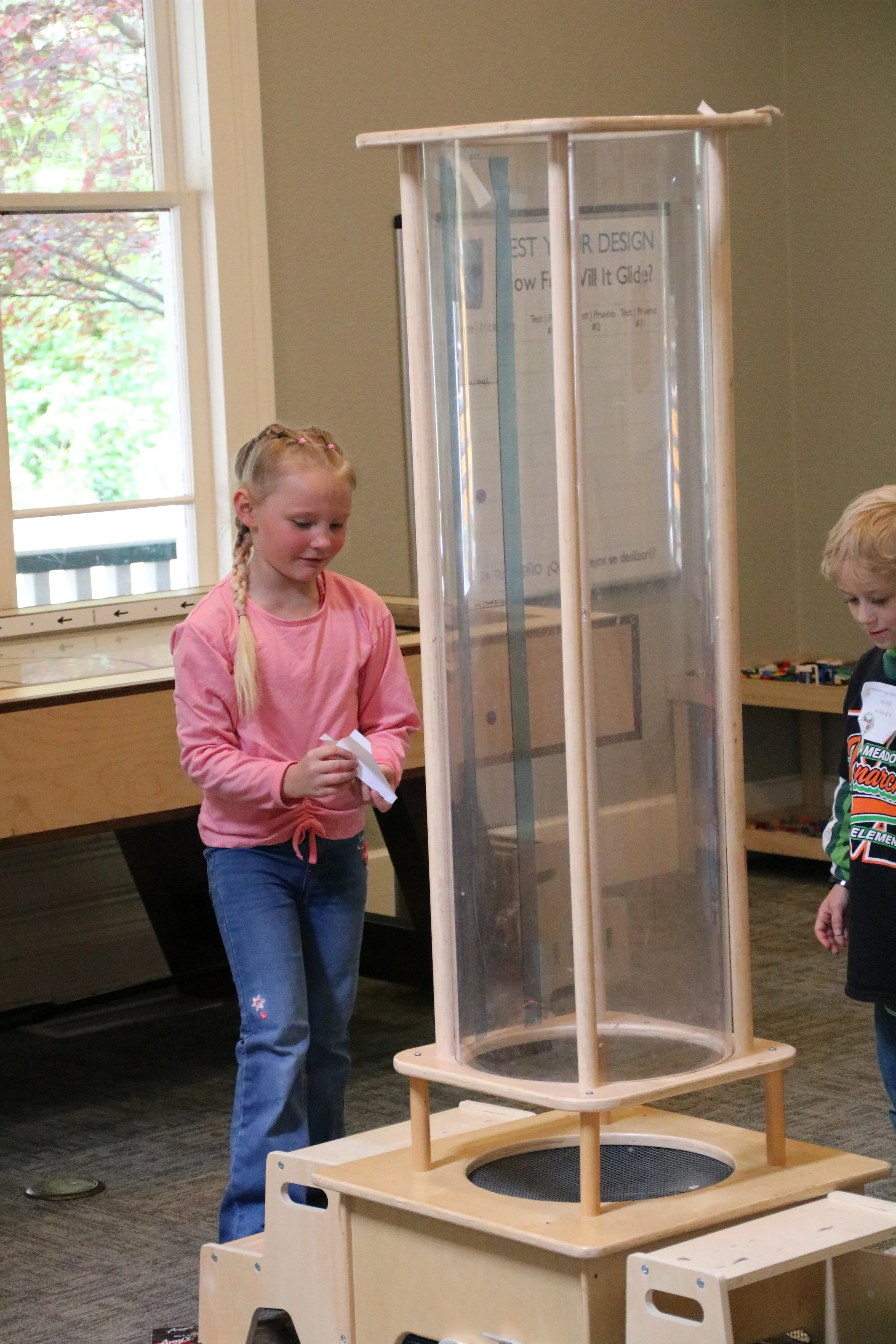
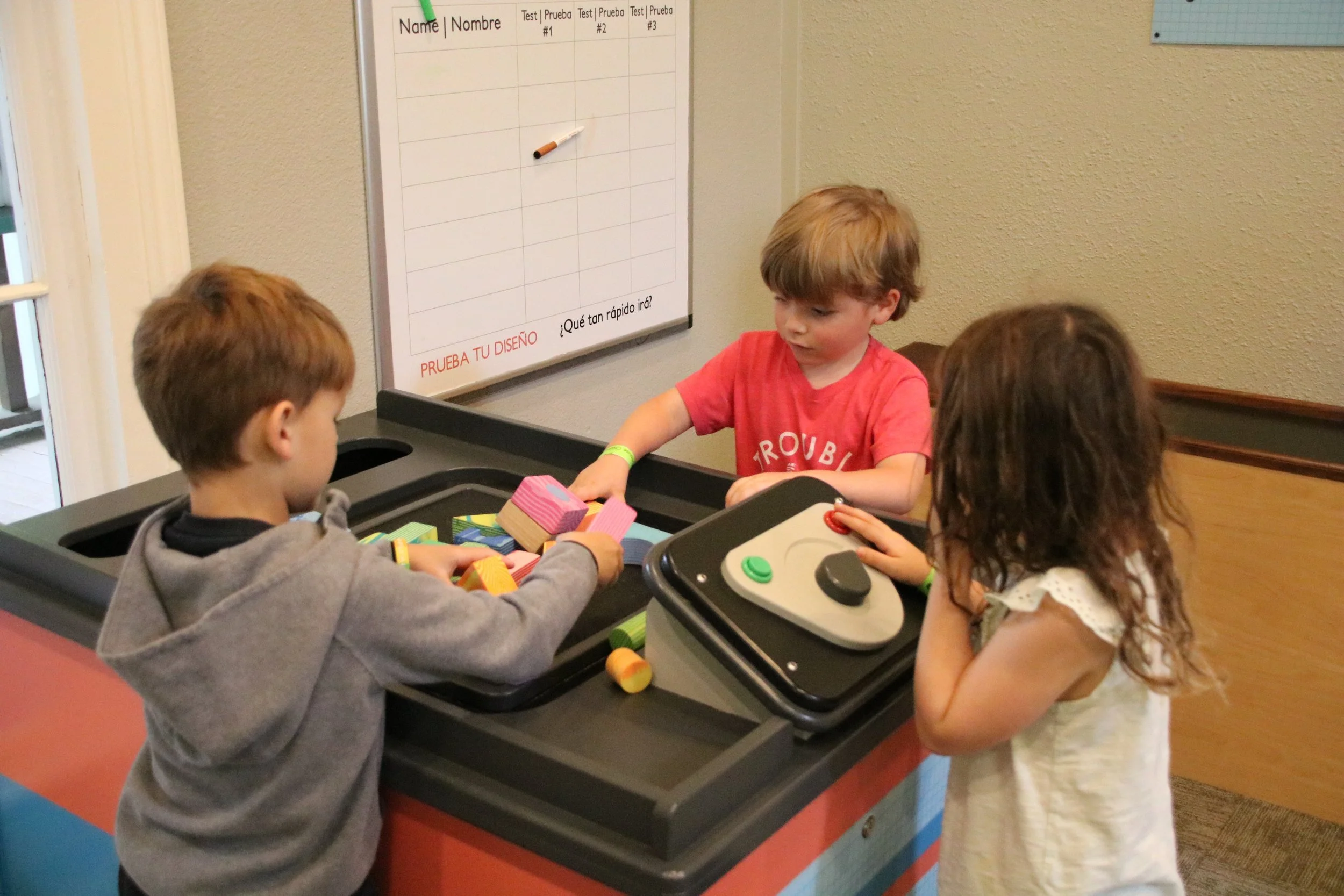
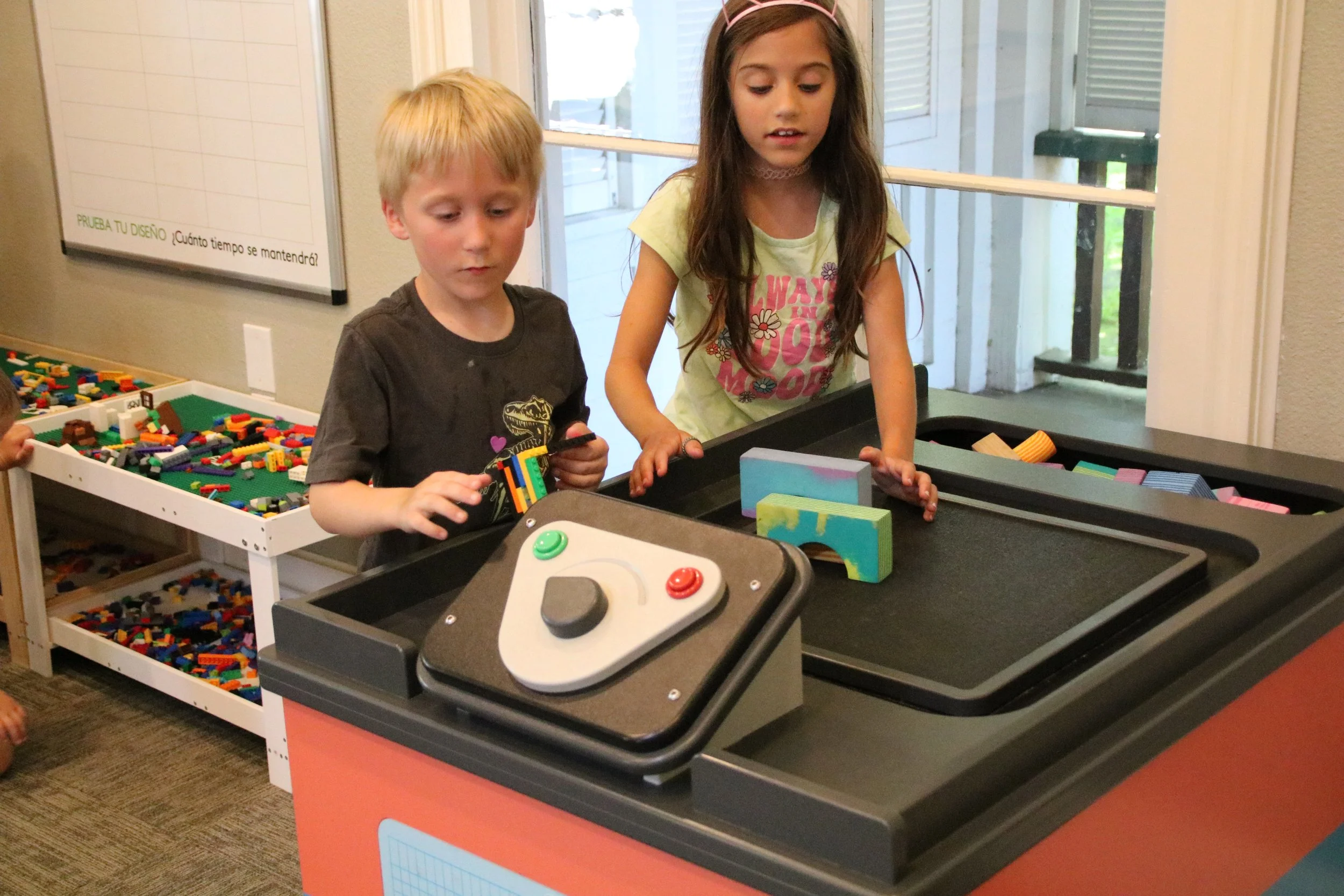
Race vehicles down steep multi-lane tracks to test momentum and friction. Launch parachutes and gliders through the vertical Air Tube to experiment with lift, drag, and air resistance. Place towers on the Earthquake Machine's vibrating platform to test structural stability against simulated seismic activity. Each station encourages the scientific method - make a hypothesis, test it, observe results, then head back to modify your design for better performance.
This exhibit teaches that failure is valuable data. Whether your creation rolls fast or tips over, flies gracefully or tumbles down, every test reveals information that helps young scientists and engineers refine their designs and understand the invisible forces shaping our world.
-
Racing Tracks: Multi-lane, steep-incline ramps for testing the momentum and friction of wheeled creations
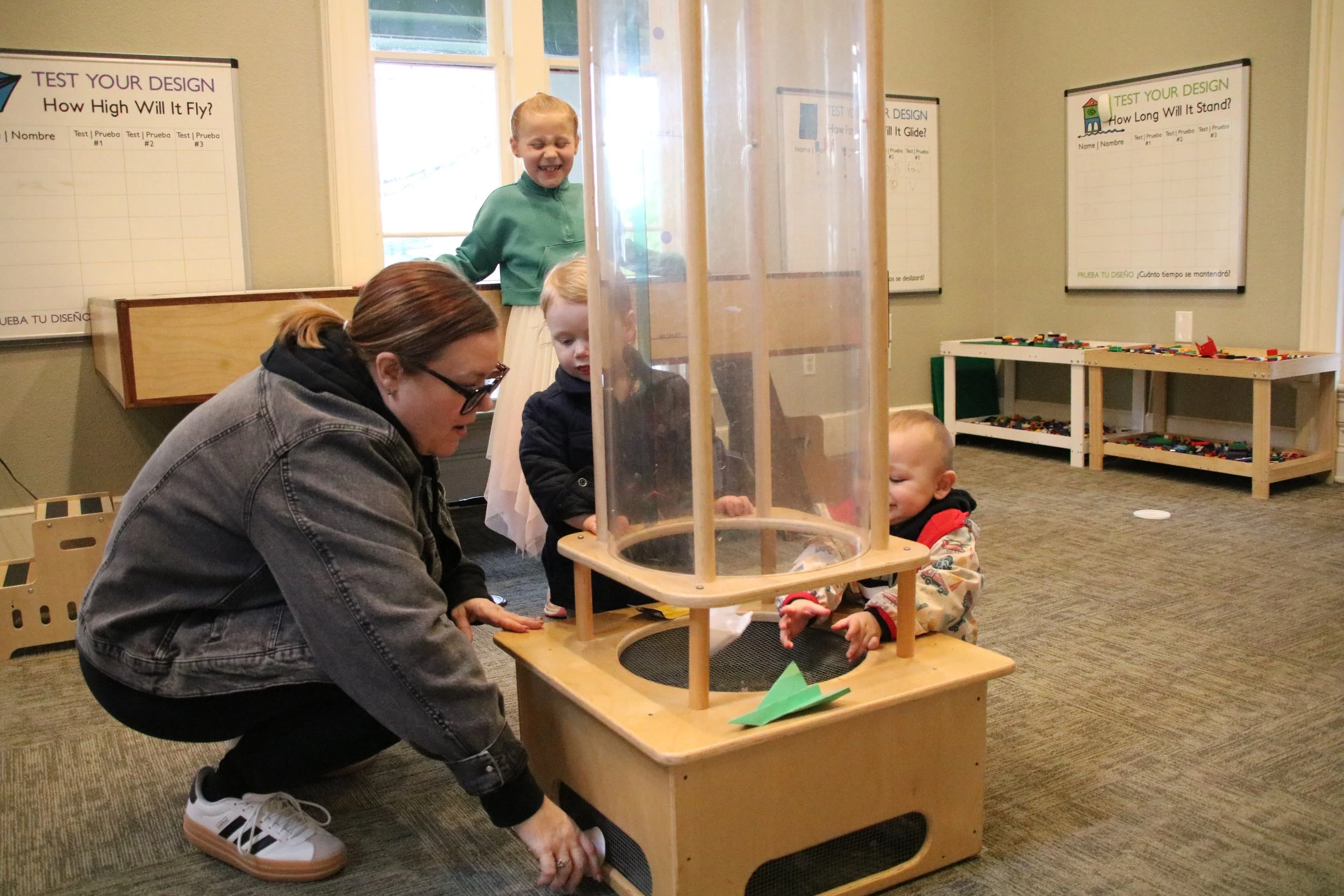
Vertical Air Tube: A high-powered launcher used to test the lift, drag, and air-resistance of parachutes and gliders
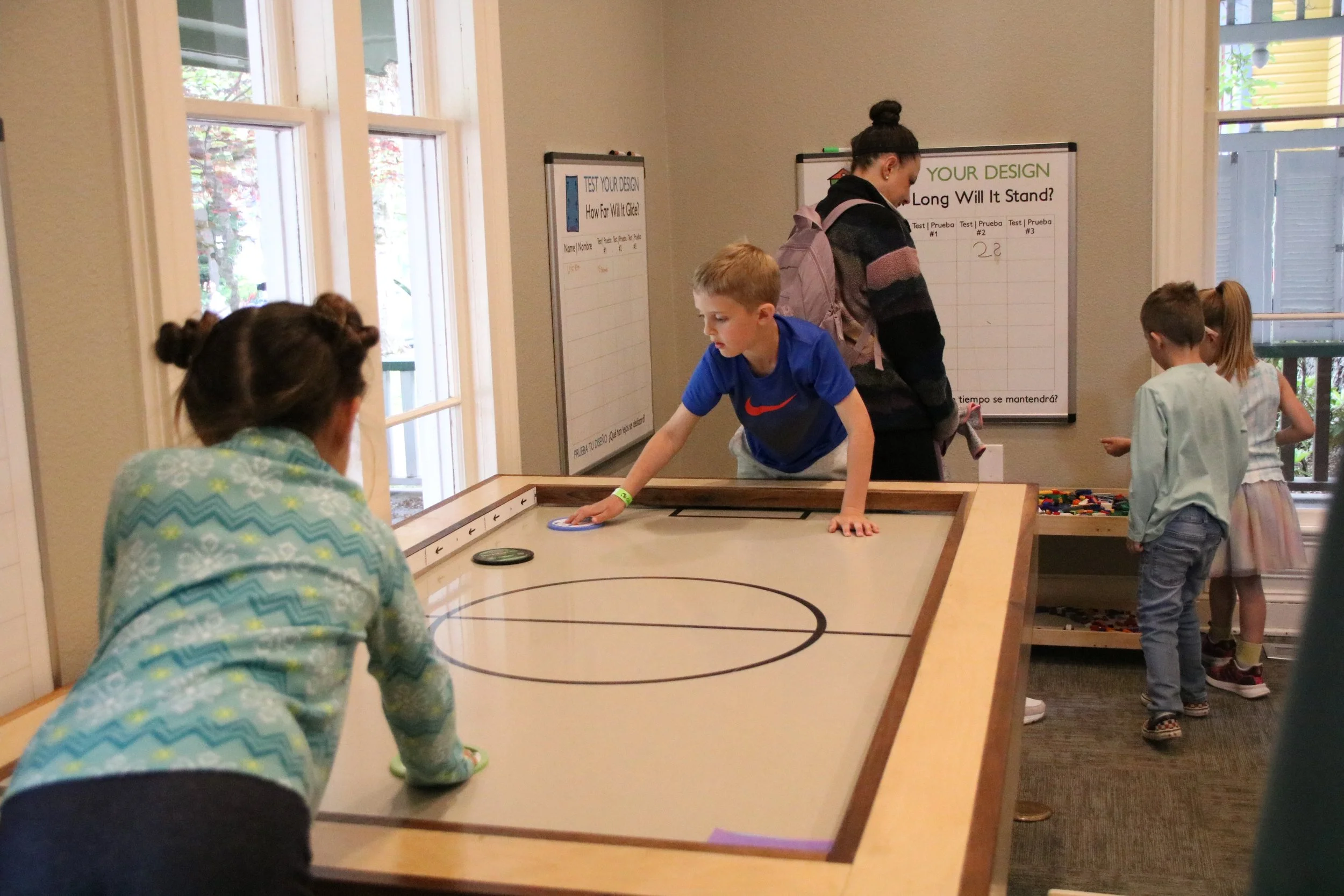
Air Table: test if your creation can float and glide
Earthquake Machine: A specialized vibrating platform that simulates seismic activity to test the durability of architectural towers
-
Science: Observing and experimenting with physical phenomena like gravity, wind resistance, and force
Engineering: Using data from "failed" tests to redesign and improve the performance of a structure
Math: Comparing speeds, calculating angles, and measuring distances to find the most efficient design
-
Scientific Observation: Formulating a hypothesis and observing if objects will roll or glide as predicted
Tangible World: Manipulating variables - such as weight or surface area - to change a physical outcome
Observation: Closely watching results to identify patterns in motion, stability, and speed
Explore More
This exhibit is located in Parrish House. Also explore: Engineering Studio | Creative Space